Data-Driven SEO Lessons from 12+ Years of Content Strategy
Ross Hudgens, founder of Siege Media, recently shared insights from over 12 years of content marketing and SEO experience working with high-growth startups and established brands. His presentation revealed several data-backed findings that challenge common content marketing practices and suggest new
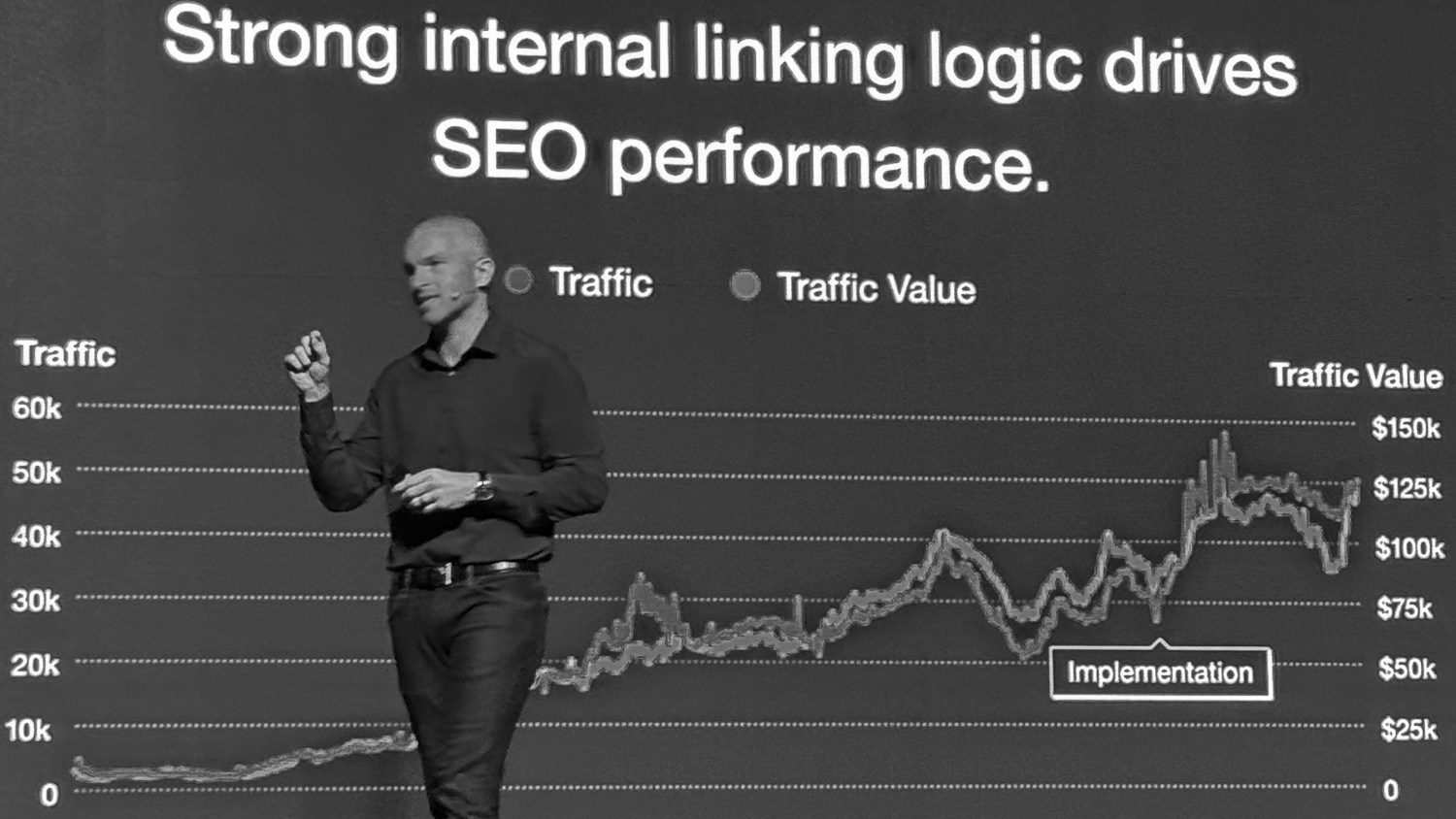
Ross Hudgens, founder of Siege Media, recently shared insights from over 12 years of content marketing and SEO experience working with high-growth startups and established brands. His presentation revealed several data-backed findings that challenge common content marketing practices and suggest new approaches for 2024 and beyond.
This analysis examines key findings from Hudgens’ research across content strategy, creation, distribution, and keyword research, with a focus on practical implementation and measurable results.
Key Content Strategy Findings
Navigation and User Experience Impact
Recent testing by Siege Media found that implementing sticky top navigation with contrasting call-to-action buttons increased goal conversions by 40%. This finding aligns with patterns observed across high-performing B2B websites.
Key implementation details:
- Maintain main navigation consistency across content sections
- Include contrasting CTA buttons that follow scroll
- Integrate content sections into main site navigation instead of isolated blog navigation
Hero Image Optimization
Analysis showed that reducing hero image size led to:
- 10% organic traffic increase within 60 days
- Improved core web vitals
- Faster time-to-value for content consumption
Internal Linking Structure
Research across competitive verticals revealed that increasing post-content related links from three to six or more resulted in:
- 5% lift in engagement metrics
- Improved organic traffic performance
- Better topic clustering and relevance signals
Implementation requirements:
- Links must be highly relevant and topically siloed
- Content should support 6+ related articles per topic
- Design should maintain clean user experience
Content Architecture Findings
Content Section Visibility
Analysis of underperforming enterprise sites revealed a common pattern: content sections often represented less than 2% of internal link structure. Successful implementations showed:
- Content sections visible in main navigation
- Category links in drop-downs
- Footer links to key content
- Minimum 2% of total internal link structure
Example implementation from Kraken:
- Direct “Learn” link in top navigation
- Extended footer links to key articles
- Category-based navigation structure
Related Content Logic
Pattern analysis of high-performing sites showed the importance of curated related content logic:
Recommended implementation hierarchy:
- Primary tag matches (SEO-focused content)
- Same category content
- Manually curated selections
- Recent content (least preferred option)
Keyword Research Evolution
Bottom-Funnel Focus
Analysis showed high-value terms often have low reported search volume. Example case study:
- Term: “[Brand] vs competitor”
- Reported search volume: Near zero
- Actual results: 200K pipeline value
Recommended bottom-funnel frameworks:
- Product cost comparisons
- Product vs product comparisons
- Templates and tools
- Alternative solutions
- Implementation guides
Search Intent Validation
New approach to keyword validation:
- Start with buyer journey mapping
- Input theoretical searches
- Validate with Google suggest data
- Cross-reference with customer feedback
- Consider lifetime value potential
Content Update Frequency
Analysis of competitive SERPs showed timestamp patterns indicate required update frequency:
Process:
- Calculate average update frequency of top 10 results
- Round up to nearest practical interval
- Factor update frequency into content planning
- Adjust based on vertical-specific patterns
Example findings:
- Product comparison content: Monthly updates required
- Tool roundups: Quarterly updates typical
- Implementation guides: Annual updates sufficient
Content Creation Strategy
First-Party Data Impact
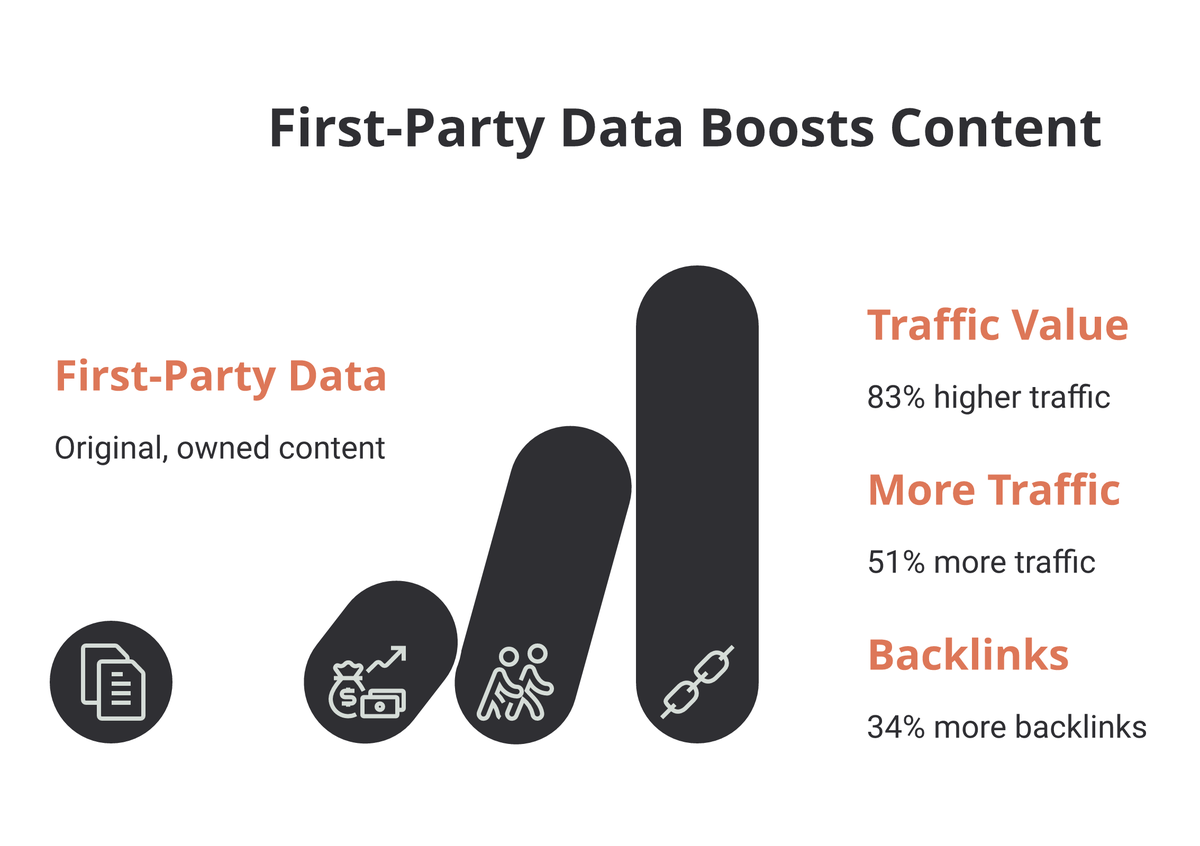
Analysis of content performance with and without first-party data showed:
- 83% higher traffic value
- 51% more traffic
- 34% more backlinks
Implementation approach:
- Create central data bank from customer research
- Reference data points across content universe
- Update data annually
- Feature data prominently in introductions
Content Introduction Structure
Pattern analysis of high-performing content revealed consistent introduction structure:
Required elements:
- Attention-grabbing first sentence
- Proof point (data or social proof)
- Clear benefit statement
- Preview of detailed content
My Take: What This Means for Solo Publishers
Hudgens’ research comes from an agency context — high-growth SaaS and enterprise brands. But most of the findings translate directly to solo affiliate publishing, sometimes even more powerfully. Here’s what’s actually worth acting on.
First-party data is the real moat. The 83% higher traffic value stat isn’t surprising — it’s something most solo publishers already know intuitively but don’t operationalize. Running an original survey, doing a real product test, or compiling data nobody else has is exactly what separates content that earns links from content that just exists. Recent research from impact.com confirms this: in AI-driven search, third-party publisher content is becoming the primary signal AI draws from — accounting for up to 65% of what LLMs reference in certain categories. Your first-party insights are what get you cited. This connects directly to building passive link acquisition through data studies — the output format matters less than having something genuinely original to say.
Stop obsessing over search volume on bottom-funnel terms. The “200K pipeline value from near-zero volume” case study is the affiliate equivalent of a $47 commission rate product with 800 monthly searches outperforming a $3 commission product with 50K searches. I’ve seen this play out on review and comparison content across multiple sites. Keyword tools have always underreported bottom-funnel terms because they aggregate poorly. Trust intent signals over volume numbers. And if you’re doing proper SEO testing rather than just publishing and hoping, you’ll see this pattern show up in your own data quickly.
The content refresh cadence insight is underrated. Reverse-engineering SERP timestamps to set your update schedule is practical and takes maybe 20 minutes per content cluster. For affiliate roundups — cameras, software, gear — the answer almost always comes back “every 3-4 months or after any major product launch.” A systematic content reoptimization framework turns this from a chore into a repeatable process. Set a calendar reminder, don’t wait until rankings slip.
What to skip: The sticky navigation and hero image findings are real, but they’re SaaS-conversion optimizations, not affiliate publishing wins. If your site runs Mediavine, a sticky nav can actually hurt RPM. Focus your energy on the keyword and content quality findings — those move the needle for ad-supported and affiliate sites alike. For a broader view on keeping traffic sources resilient, the traffic diversification playbook and the breakdown of Google’s ranking mechanisms give useful complementary context to Hudgens’ data.
Action Items
- Audit internal linking structure to ensure content sections receive >2% of total links
- Implement sticky navigation with contrasting CTAs for primary conversion paths
- Increase related content links to minimum of six highly relevant articles
- Create first-party data collection plan focusing on customer behavior insights
- Develop content refresh calendar based on SERP timestamp analysis
- Update content templates to prioritize data integration and structured introductions
- Implement systematic monitoring of bottom-funnel keyword opportunities
Technical Implementation Notes
- Use Google Analytics 4 for engagement metrics tracking
- Monitor Core Web Vitals impact of navigation changes
- Track internal link distribution with tools like Screaming Frog
- Document update frequencies by content type
- Measure conversion impact across devices
The shift toward data-driven content strategy represents a maturation of SEO practices, moving beyond volume-based keyword targeting to focus on actual user behavior and business impact. Success requires systematic implementation of these findings while maintaining flexibility to adapt to specific vertical and audience needs.