How Andy Skraga Made Over $500k from Free Facebook Traffic
In the latest episode of the Niche Pursuits Podcast, Andy Skraga, a seasoned Facebook marketer, shares his expert strategies for driving substantial traffic to websites using Facebook. This blog post encapsulates Andy’s insights and techniques, highlighting key points from niche selection to monetiz
In the latest episode of the Niche Pursuits Podcast, Andy Skraga, a seasoned Facebook marketer, shares his expert strategies for driving substantial traffic to websites using Facebook. This blog post encapsulates Andy’s insights and techniques, highlighting key points from niche selection to monetization. Andy’s methods emphasize the repeatability and data-driven nature of his approach, encouraging experimentation to discover the best content formula for each niche.
Introduction and Background
Andy Skraga is renowned for his success in using Facebook to generate significant website traffic. Transitioning from SEO to Facebook marketing, Andy found that Facebook offered a faster and more dynamic way to drive traffic. His journey and achievements make him a credible source for learning how to harness Facebook’s potential.
Overview of Facebook Traffic Strategy
Andy’s strategy revolves around creating a niche website, building a corresponding Facebook page, and crafting content tailored for Facebook virality. He underscores the importance of understanding the type of content that thrives on Facebook—lighthearted, entertaining, and emotional stories typically perform better than heavy or news-based content.
Niche Selection and Audience Building
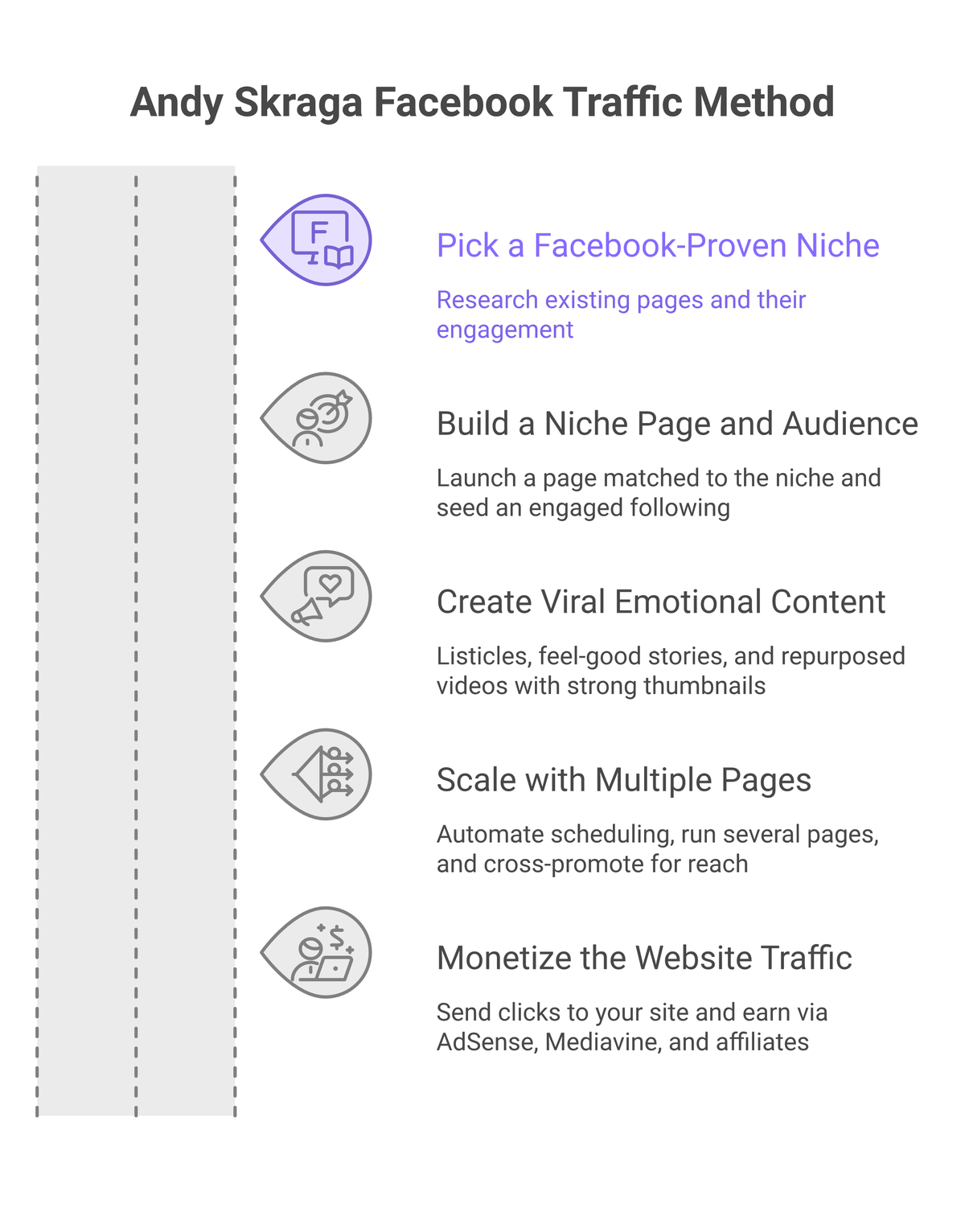
Selecting the right niche is paramount. Andy recommends researching niches with proven performance on Facebook by analyzing existing pages and their engagement levels. To kickstart audience building, he suggests buying the initial 10,000 Facebook page likes through targeted ads. This helps in creating an engaged audience that aligns with the niche.
Content Creation and Optimization
Creating viral content is an art. Andy advises focusing on listicles, emotional stories, and repurposed viral videos with captivating thumbnails and titles. Tools like ChatGPT can aid in content ideation, and user-generated content can enhance engagement. The goal is to create content that not only grabs attention but also encourages sharing.
Scaling and Automation
Scaling the strategy involves automating content scheduling using tools like Post Planner and creating multiple Facebook pages within the same niche. Recycling and repurposing content by tweaking thumbnails and titles can also extend the life and reach of the content. Cross-promotion across different pages increases the chances of virality.
Monetization and RPMs
Monetizing Facebook traffic can be achieved through AdSense, Mediavine, and affiliate marketing. Andy points out that certain niches can yield high RPMs (revenue per thousand impressions) from Facebook traffic, though results can vary. The key is to align the monetization strategy with the type of content and audience engagement.
Best Practices and Considerations
To maintain sustainable growth, it’s crucial to adhere to Facebook’s terms of service and avoid copyright infringements. Andy mentions that it typically takes 4-6 months to gain good traction and 6-12 months to see substantial traffic and revenue. Patience and consistency are vital.
My Take: What This Means for Solo Publishers
Andy’s $500k story is real, but the timing matters. He built most of that during Facebook’s peak traffic era, when the algorithm was actively pushing page content out to followers and organic reach was genuinely free. In 2025, that window has narrowed considerably. Facebook organic reach for pages is now consistently reported at 1–6%, and Meta has made it clear that their algorithm is designed to keep users scrolling on-platform, not clicking out to your website.
That doesn’t mean the playbook is dead — it means you have to be realistic about where it fits in your channel mix.
The part still worth doing: building a niche Facebook page as a supplementary channel, not a primary traffic source. The emotional and viral content formula Andy describes still works for certain niches — animals, nostalgia, feel-good human interest. If your site plays in those spaces, a Facebook page is cheap to maintain and occasionally throws a meaningful traffic spike your way. The Facebook Bonus Program also changes the economics — there’s now direct revenue from Facebook itself if you hit engagement thresholds, separate from ad RPMs on your website. It’s worth understanding how to get approved for it before you build the page.
The part I’d skip: buying 10,000 page likes via ads in 2025. The fake-audience problem has worsened, and purchasing likes primarily to seed engagement tends to produce a dead audience that tanks your organic reach score. Spencer Haws’ more recent Facebook results are a better benchmark for what’s actually achievable today — realistic for a solo publisher running a tight niche, not the hockey-stick numbers Andy hit at peak reach.
The bigger takeaway from Andy’s story isn’t “do Facebook” — it’s that single-channel dependency is the real risk. He built something that generated serious cash precisely because he found a non-SEO traffic source before his competitors did. That logic still holds in 2025; the channel just needs to match current platform realities. Anne Moss’s approach to sustainable Facebook engagement is a more grounded model for the current algorithm. And if you’re thinking about this from a portfolio angle, the traffic diversification playbook is worth reading before committing to any single platform — the principle outlasts the tactics. For a worked example of the multi-site version, Robert Schrader’s network of niche travel sites shows the same diversification run across a portfolio rather than one page.
Action Items
Here are actionable steps to implement Andy Skraga’s strategies:
- Research and Select a Niche: Analyze existing Facebook pages and engagement levels to choose a niche that performs well on the platform.
- Build an Audience: Purchase the initial 10,000 Facebook page likes through targeted ads to establish an engaged audience.
- Create Optimized Content: Focus on listicles, emotional stories, and repurposed viral videos with intriguing thumbnails and titles.
- Leverage AI and User-Generated Content: Use tools like ChatGPT for content ideas and incorporate user-generated content.
- Automate Scheduling: Utilize tools like Post Planner to automate content posting.
- Expand Reach: Create multiple Facebook pages within the same niche and cross-promote content.
- Repurpose Content: Change thumbnails and titles to recycle and extend the life of content.
- Monetize Traffic: Implement monetization strategies such as AdSense, Mediavine, and affiliate marketing.
- Follow Rules: Adhere to Facebook’s terms of service and be mindful of copyright issues.
- Be Patient: Expect 4-6 months for good traction and 6-12 months for significant traffic and revenue.
By following these steps, you can replicate Andy Skraga’s success and effectively drive traffic to your website using Facebook. Remember, experimentation and data-driven decisions are key to finding the perfect content formula for your niche.
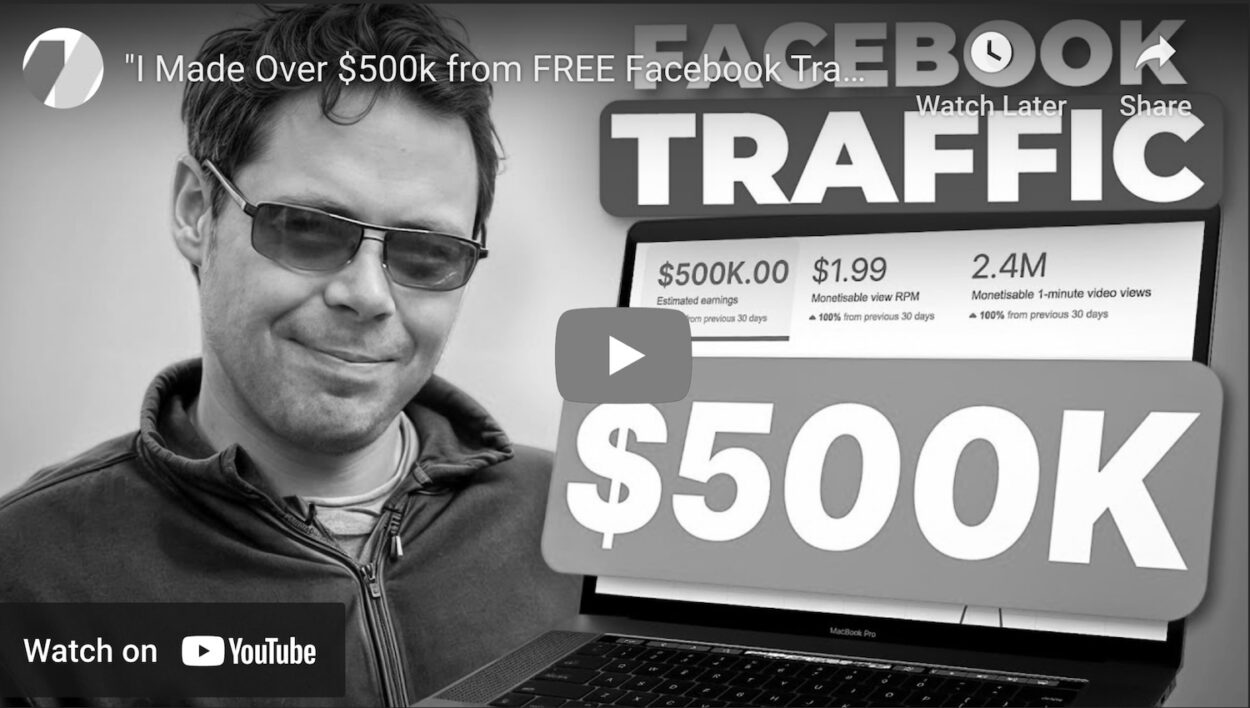
Watch “I Made Over $500k from FREE Facebook Traffic” by Niche Pursuits Podcast.
Frequently Asked Questions
How did Andy Skraga make over $500k from free Facebook traffic?
Andy Skraga earned over $500k by building niche websites, creating matching Facebook pages, and crafting lighthearted, emotional content engineered for Facebook virality. He drove that free Facebook traffic back to his sites and monetized it through AdSense, Mediavine, and affiliate marketing. He treated the process as a repeatable, data-driven system to apply across multiple niches rather than a one-off campaign.
What type of content does Andy Skraga’s Facebook strategy rely on?
Andy Skraga’s strategy relies on lighthearted, entertaining, and emotional content rather than heavy or news-based material, since those formats perform best on Facebook. He favors listicles, emotional stories, and repurposed viral videos paired with captivating thumbnails and titles. He also uses tools like ChatGPT for content ideation and incorporates user-generated content to boost engagement and sharing.
How long does Andy Skraga’s Facebook traffic method take to work?
According to Andy Skraga, the Facebook traffic method typically takes 4-6 months to gain good traction and 6-12 months to see substantial traffic and revenue. He stresses that patience and consistency are essential, alongside a data-driven, experimental approach to find the right content formula for each niche. He also advises following Facebook’s terms of service and avoiding copyright infringement to keep growth sustainable.
Does Andy Skraga’s free Facebook traffic strategy still work in 2025?
Andy Skraga’s strategy still works partially, but the timing matters because he built most of his $500k during Facebook’s peak organic-reach era. By 2025, Facebook page organic reach is consistently reported at just 1-6%, and Meta’s algorithm now favors keeping users on-platform over clicking out. The viral content formula remains useful as a supplementary channel for niches like animals and nostalgia, but buying 10,000 page likes is no longer advisable.
Sources: Andy Skraga’s strategies discussed on the Niche Pursuits Podcast; organic reach data from industry reports 2024–2025. Related reading on RankingHacks: The Diversification Playbook, Leveraging the Facebook Bonus Program, Spencer Haws’ Facebook Results.