Lily Ray Discusses Google’s Helpful Content Update: Key Insights and SEO Implications
TL;DR: The Easy Summary Understanding the Impact of Google’s March 2024 Core Update In a recent discussion, Gael Breton and SEO expert Lily Ray delved into the implications of Google’s March 2024 core update. The conversation revolved around the changes in Google’s search landscape and how to naviga
TL;DR: The Easy Summary
- Impact of Recent Updates: Reddit and Quora’s prominence in search results has increased, complicating searches for relevant content. Challenges persist in recovering from the Helpful Content Update, with real-world recovery cases scarce.
- Adaptation Strategies: Emphasizing adaptability in SEO strategies and business models. Integration of e-commerce or services can help maintain visibility.
- E-A-T Importance: Highlighting the role of Expertise, Authoritativeness, and Trustworthiness, which may be tied to domain authority.
- AI and Search: AI-driven features like the Search Generative Experience are reshaping user interaction with search engines, raising concerns about content authenticity.
- Action Steps for SEO:
- Focus on creating authentic, high-quality content that genuinely serves user needs.
- Diversify traffic sources by leveraging platforms like Google Discover and YouTube, and engaging on social media.
- Develop a robust brand that resonates with firsthand experiences and authenticity.
- Stay flexible and ready to adapt to ongoing changes in search engine algorithms and user behaviors.
Understanding the Impact of Google’s March 2024 Core Update
In a recent discussion, Gael Breton and SEO expert Lily Ray delved into the implications of Google’s March 2024 core update. The conversation revolved around the changes in Google’s search landscape and how to navigate the impact of the update.
As we’re coming to the tail end of the March 2024 core update, many things have changed in Google’s landscape in the past months.
Gael Breton, Co-Founder at Authority Hacker
One of the key points raised was the user experience and visibility changes. Lily Ray expressed her dissatisfaction with the increasing dominance of sites like Reddit and Quora in search results, making it harder to find relevant information. They also noted that tools like Ahrefs and Systrix might not fully capture the impact of SERP features and layout changes on website traffic.
I’m sure a lot of people think I’m naive, but I wasn’t expecting Reddit and Quora to continue to grow at the same rate that they were.
Lily Ray, Senior Director at Amsive
Navigating the Challenges of the Helpful Content Update (HCU)
The conversation then shifted to the Helpful Content Update (HCU) and the recovery challenges it presents. Drawing parallels to previous algorithm updates like Panda and Penguin, the participants expressed doubt about Google’s claims of recovery within a few weeks, citing a lack of real-world recovery cases.
The Role of Business Models in Website Visibility
The potential impact of business models on website visibility was also discussed. Lily Ray pointed out that sites offering products or services tend to maintain better rankings compared to pure content sites. This led to a discussion on the motivations behind some sites introducing services or e-commerce components to adapt to the changing search landscape.
I tend to tell people that the way to solve the SEO problem is to stop thinking about SEO a little bit and do something else.
Gael Breton, Co-Founder at Authority Hacker
Deciphering the Importance of E-A-T in SEO
The concept of Expertise, Authoritativeness, and Trustworthiness (E-A-T) was also explored. The participants questioned how Google measures these factors and whether E-A-T is a significant factor or more closely tied to domain authority.
The Rise of AI-Powered Search: Exploring the Search Generative Experience (SGE)
The emerging Search Generative Experience (SGE) and the potential impact of AI-powered search on the industry and user behavior was another key point of discussion. Concerns were raised about the reliability of AI-generated content and the potential for SGE to reduce traffic to websites.
Throughout the discussion, the importance of adapting to algorithm changes and diversifying traffic sources was emphasized. The participants suggested focusing on creating authentic, high-quality content that resonates with users and exploring other channels like YouTube, social media, and email marketing to drive traffic and engagement. The dynamic nature of SEO was highlighted, stressing the need for webmasters and content creators to stay agile and innovative.
My Take: What This Means for Solo Publishers
Lily Ray’s observations from 2024 have only gotten sharper since. By mid-2025, she was calling Google’s AI Overview rollout “probably the single most dramatic change in the SEO space in 25 years” — and if you run affiliate content sites, you’re feeling every bit of that. Here’s what I actually think matters for people in our position.
The HCU wasn’t a fluke — it was a policy shift. The original framing was “we’re targeting low-quality content.” What became clear over 18+ months is that pure content sites — the kind that run on display ads and affiliate commissions without selling a product or service — are structurally disadvantaged now. This isn’t something you write your way out of with better content. The sites still ranking well in competitive niches either have a genuine brand, sell something, or have pivoted to forums and UGC-heavy strategies. That’s not cynicism, that’s the pattern.
What’s actually working for affiliate publishers right now: Analysis of surviving affiliate sites shows the ones holding rankings have real review methodologies on the page, first-person testing, original photography, and sometimes video. They don’t just add these as decorations — they make them the structural backbone of the content. Lily’s research confirms Google is rewarding this, but only when it’s clearly authentic. Bolting a “my experience” paragraph onto a thinly researched roundup won’t save you. This ties directly into what the HCU recovery case studies show — technical fixes alone don’t cut it.
The Reddit/forum angle is real and exploitable. Google prioritizing UGC isn’t just bad news — it’s an opening. Publishing on Medium, Reddit, or LinkedIn Pulse and linking back to your money pages or affiliate products can work. LLMs and AI Overviews are pulling heavily from these sources. If you’ve been ignoring traffic diversification because organic was strong, now’s the time to act. Building presence where conversations happen isn’t a hedge anymore — it’s a primary channel.
What to actually ignore: Vague advice to “build your brand” is useless without specifics. Same with “diversify traffic sources” as a standalone recommendation — you need a real plan for which platforms, what content, and how it connects to revenue. If you’re running a review or comparison site, the framework in Peter Macinkovic’s affiliate SEO breakdown is more actionable than most of what’s circulating right now.
The bigger picture for solo publishers: The June 2025 core update showed some HCU recovery for a handful of sites, but it was selective. Google is rewarding sites that behave like real editorial operations, not content factories. If you’re building something long-term, the context density framework and understanding how Google’s ranking signals actually work matter more now than chasing any individual update.
Bottom line: Lily Ray’s 2024 read held up. Publishers who took the structural advice seriously — real brand, real products or services, genuine diversification — are in a better position heading into 2026. The ones still waiting for a recovery update are still waiting.
The AI-Era Angle: “Surviving the Update” Now Means “Staying Cited”
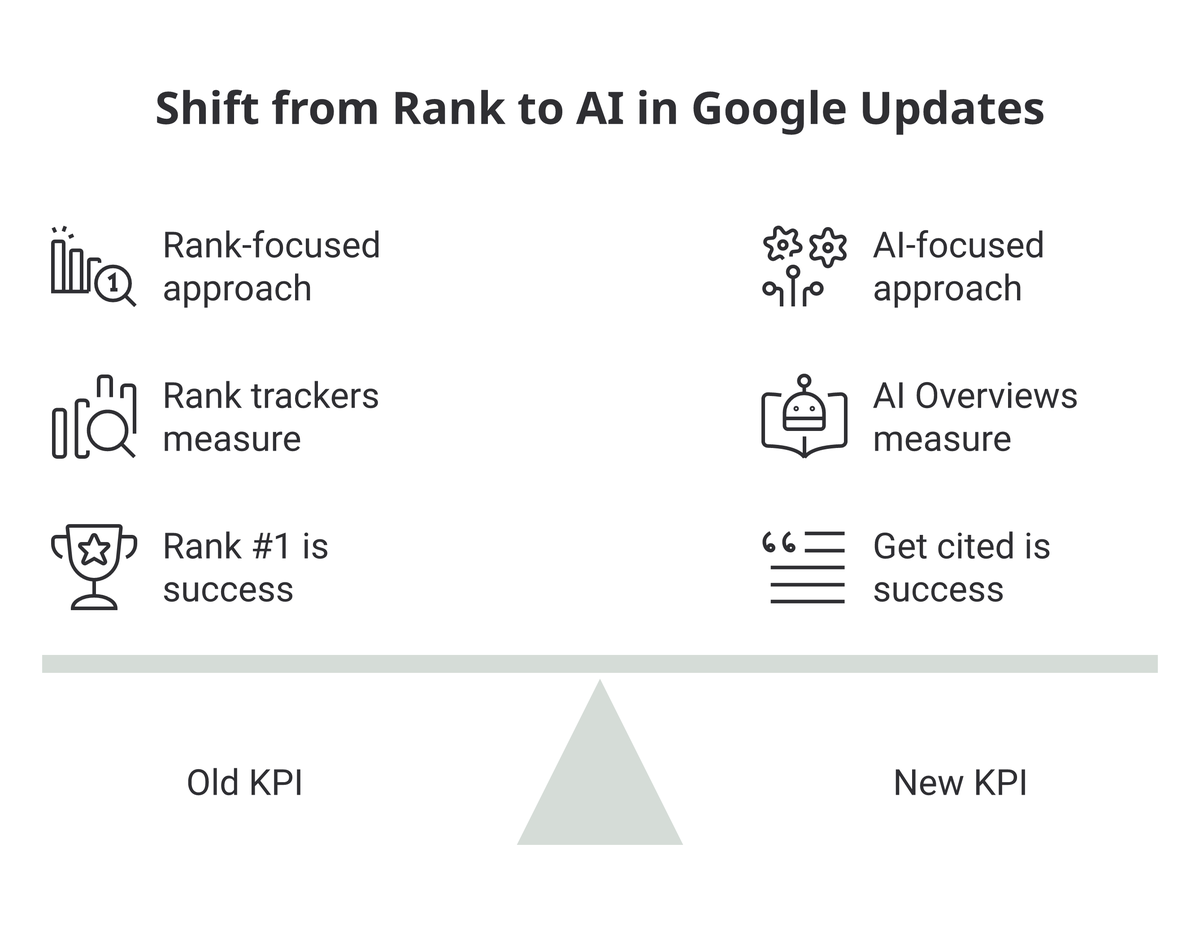
This whole conversation is framed around a single instinct: a core update lands, you check whether you survived it, you scramble to recover if you didn’t. That instinct is now half-blind. Google no longer ships pure ranking updates — it ships AI Overviews alongside them, and the May 2024 update Lily Ray was reacting to was the same season Google began rolling AIO into live results. The SGE concern she flagged at the tail of the discussion stopped being a future risk and became the layout. So “did I survive the update?” has quietly split into two questions, and most publishers are still only asking the first.
The first question — did my blue link hold its position? — is the one the rank trackers answer. The second — am I in the synthesized answer that now sits above my link? — is the one that decides whether the position is worth anything. You can survive a core update in the classical sense, keep your rank, and still lose the click because an AI Overview answered the query before the user ever scrolled to you. That maps directly onto answer-engine optimization (GEO): the win condition has moved from rank #1 to get cited, and a core update can leave the first untouched while quietly gutting the second.
What’s striking is that everything Lily Ray named as the durable defense is the same thing that earns the citation. The UGC/forum dominance she disliked is retrieval doing its job — answer engines pull heavily from Reddit, Quora, and Medium because those pages are clean, attributable, and dense with first-person specifics. The E-A-T-tied-to-brand pattern she described is exactly how a model decides which source to trust enough to lift into an answer. The pure-content sites the HCU disadvantaged are the same ones a retriever skips. None of the structural advice in this post changes for the AI era — it just gets a sharper KPI. Stop measuring whether you survived the update by your rank, and start measuring it by whether you’re the passage the answer engine quotes. The publishers who reframe “recovery” as “citability” are optimizing for the surface that actually still sends traffic.
Adapting to the Ever-Changing SEO Landscape: Strategies for Success
- Stop following the same marketing advice as everyone else, strive to be unique and innovative.
- Prioritize writing about topics you are knowledgeable and passionate about before conducting keyword research or planning your editorial calendar.
- Diversify your traffic sources, don’t rely solely on organic search. Explore platforms like Google Discover, YouTube, and various social media channels.
- Concentrate on building a strong brand and producing content that reflects your firsthand experiences and authenticity.
- Think about expanding your offerings beyond just content. Consider introducing products or services to adapt to the changing search landscape.
- Remain flexible and innovative as search landscapes and algorithms evolve. Always be ready to adapt your strategies accordingly.
Watch: March Core Update Analysis with Lily Ray by Authority Hacker on YouTube