Unlocking Google Discover: Thomas Smith’s Proven Strategies for Boosting Website Traffic
TL;DR: The Easy Summary The article discusses Google Discover, a traffic source that can drive significant traffic to websites by displaying content tailored to users’ interests. The speaker, Thomas Smith, shares his experience and strategies for optimizing content for Discover. He emphasizes the im

TL;DR: The Easy Summary
The article discusses Google Discover, a traffic source that can drive significant traffic to websites by displaying content tailored to users’ interests. The speaker, Thomas Smith, shares his experience and strategies for optimizing content for Discover. He emphasizes the importance of compelling headlines, engaging visuals, covering relevant entities/topics, and creating Google Web Stories. Smith highlights the potential impact, with his site receiving 237,000 clicks and 3.44 million impressions from Discover in 2023. He provides examples of successful articles and offers a course on mastering Discover traffic. The key takeaways include identifying relevant entities, writing engaging content, utilizing Web Stories, and maintaining consistency to stay in Google’s good graces for Discover.
Introduction to Google Discover
Thomas Smith introduces Google Discover as an exciting and lucrative traffic source, particularly for websites struggling with traditional organic search traffic. Discover proactively displays content tailored to users’ interests based on their browsing behavior and preferences. The speaker highlights the potential impact, with his site receiving 237,000 clicks and 3.44 million impressions from Discover in 2023, leading to high-quality traffic and monetization opportunities.
Understanding Google Discover
Thomas explains how Google Discover works, displaying content as an image, headline, and publication name in a social media-style feed on mobile devices. Discover targets mostly Android users, who tend to have different demographics and income levels compared to iPhone users. The speaker emphasizes the importance of compelling visuals and headlines that evoke emotion and curiosity to stop the scroll and encourage clicks.
Requirements for Getting into Google Discover
To be eligible for Google Discover, websites need to be in Google’s good graces, have a history of at least six months, demonstrate authority in their topics, meet technical requirements (site speed, image size, reasonable ads), and have good EEAT (Expertise, Authoritativeness, Trustworthiness) for Your Money Your Life (YMYL) niches. The speaker also suggests creating an account in Google’s Publisher Center and using news schema markup, although not strictly necessary.
Optimizing Content for Google Discover
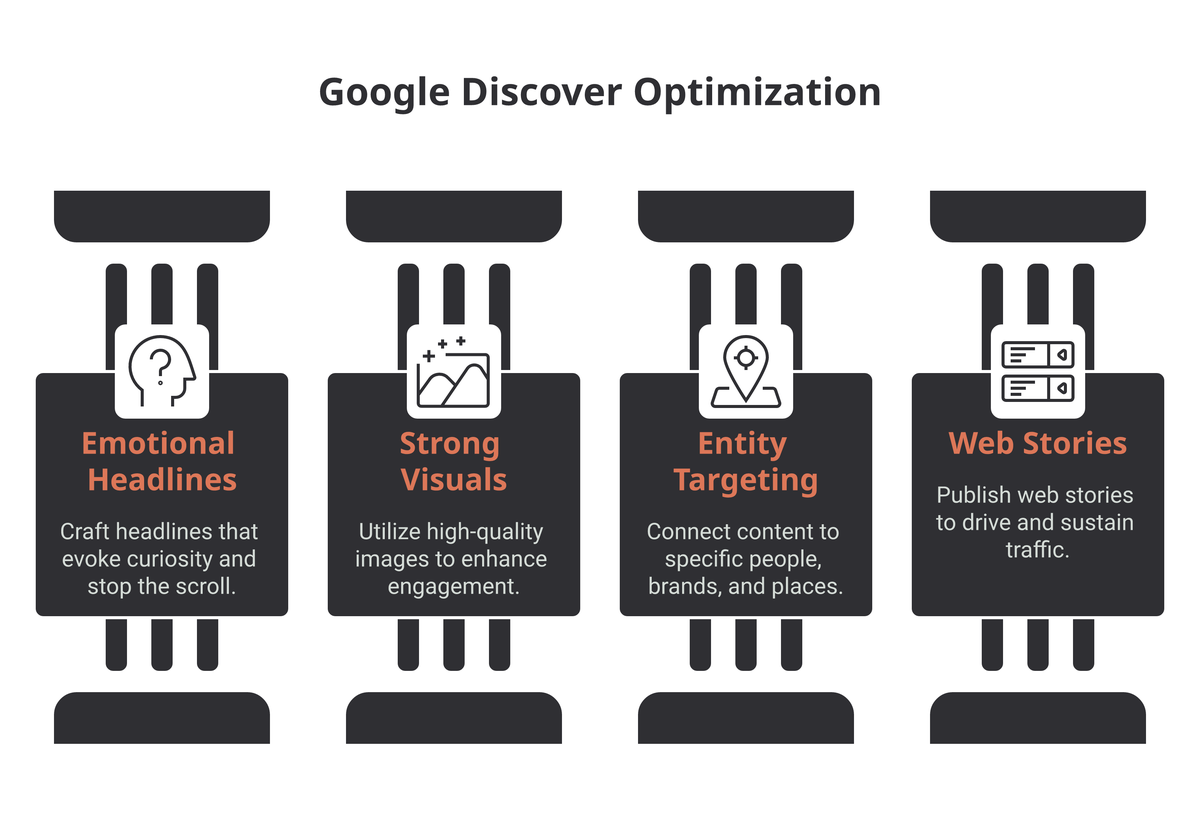
The speaker emphasizes the importance of engaging, emotional headlines that create curiosity and an information gap, as well as compelling visuals that grab attention. Covering newsworthy topics, tying into relevant entities (people, brands, places), and generating social traffic can also help content perform well on Discover. The speaker recommends creating Google Web Stories, which can help unlock Discover traffic and maintain momentum once a site is included.
Successful Examples and Strategies
The speaker shares examples of successful articles from his site, highlighting how they tied into relevant entities (e.g., Golden Gate Bridge, Northern California) and evoked curiosity or emotion. He recommends researching and targeting specific entities relevant to a site’s niche, as well as writing in an engaging, punchy style focused on user interest rather than strict SEO optimization. Mastering this approach can also benefit traffic from other platforms like Flipboard, Newsbreak, and MSN Start.
Monetization and Further Learning
The speaker notes that Google Discover traffic tends to have high RPMs ($40-$60) and good conversion rates for monetization through display ads or affiliate marketing. He mentions a mini-course he created with colleagues that delves deeper into tactics for optimizing for Discover, including a masterclass on creating Web Stories and using GPT tools for headline writing.
My Take: What This Means for Solo Publishers
Thomas’s playbook is solid, but it was assembled before Google quietly ran a Discover-focused core update (Feb 5–27, 2026) that changed a few things worth knowing before you invest time here.
The biggest shift: geo-prioritization. Google is now favoring country-specific sources over generic global content. If your site reads as “publishing for everyone everywhere,” Discover will distribute you less aggressively. The fix overlaps with what works in local SEO — tighten your geographic framing where the content allows it. A photography site isn’t just about cameras; it can be about where people shoot, what gear is popular in specific markets, stories tied to real places.
Second shift: technical requirements are now hard cutoffs. The 1,200px image minimum Thomas mentions? No longer a suggestion — it’s a filter. Same with CLS and ad density. If you’re running Mediavine or Raptive with aggressive placements, audit that before investing in Discover optimization. High ad-to-content ratio is a faster path to Discover exclusion than a weak headline.
Third: the curiosity-gap headline game is getting harder. The purely manufactured intrigue that drove big Discover numbers in 2023–24 is being filtered more aggressively post-February 2026. The sweet spot has shifted toward “evocative but accurate” — emotional pull, yes, but the article has to deliver what the headline implies. Thomas’s entity-plus-curiosity approach still works; manufactured clickbait increasingly doesn’t.
What’s still worth implementing: Web Stories and entity targeting. Neither has been touched by any update. Web Stories remain a legitimate unlock for sites that haven’t broken into Discover yet, and targeting named entities is exactly how Discover’s personalization engine decides relevance. If you’re building a traffic diversification strategy beyond organic search, Discover belongs in the mix alongside social platforms and newsletters — just not as a sole dependency.
On the revenue side: the $40–60 RPMs Thomas cites are real for display ads. Discover users are in browsing mode, not research mode, which is good for impressions. For affiliates it’s messier — Discover traffic doesn’t convert on product links the way organic search does. Think of it as a brand-building channel that grows return visitors, not a direct affiliate revenue play.
The one thing Thomas doesn’t address: topical depth as a Discover prerequisite. The Feb 2026 update rewarded sites with narrow, deep coverage and punished generalist publishers. If you’ve been spreading thin across many topics to chase organic rankings, that same breadth will hurt Discover distribution. Understanding how Google surfaces content is the foundation — pick your lanes, go deep, then layer in the Discover tactics. Thomas also covers a complementary approach in his piece on building authority through Medium, worth reading alongside this one.
Action Items
- Identify relevant entities, topics, and interests within your niche by analyzing Google Discover and using tools like Google Trends.
- Create a list of these entities and target them in your content by referencing them directly.
- Write compelling, emotional headlines that create curiosity and an information gap to encourage clicks.
- Use engaging, high-quality visuals (at least 1,200 pixels wide) that grab attention and complement the content
- Tie content into newsworthy events, timely topics, or upcoming holidays when possible.
- Publish Google Web Stories related to your articles to help unlock and maintain Discover traffic.
- Maintain a consistent publishing cadence and stay in Google’s good graces to retain Discover traffic.
- Consider promoting content on social platforms like Reddit to generate initial traffic and signal interest to Google.
- Optimize for mobile user experience, site speed, and reasonable ad density.
Sources: Thomas Smith’s Google Discover session; ClickRank.ai “Google Discover Ranking Factors 2026”; John Shehata on the Feb 2026 Discover core update. Related reading on RankingHacks: traffic diversification strategies, data-driven content planning, Thomas Smith on Medium.